
- Culture
- 8 min read
- Updated 2 Sept 2026
| Date | Wednesday 12 August 2026 |
|---|---|
| Type in Granada | Very deep partial eclipse |
| Total in Granada? | No — partial eclipse |
| Start (IGN) | 19:42 (CEST) |
| Maximum (IGN) | 20:37 (CEST) |
| End visible | Sunset ~21:10 (CEST) |
| Magnitude (IGN) | 0.96 |
| Sun at maximum | ~6° above western horizon (IGN) |
| Direction | West (~285°) |
| Organised event | Parque de las Ciencias, from 18:30 |
| Eye protection | Mandatory for direct viewing |
Quick answer: the 12 August 2026 solar eclipse in Granada has already taken place. It was a very deep partial eclipse, not total, peaking at 20:37. This page preserves the verified data and safety guidance. The next solar eclipse visible from Granada is on 2 August 2027; local timings and viewing conditions will be added once verified.
On Wednesday 12 August 2026 Spain saw one of the year’s main astronomical events: a total solar eclipse in part of the country. Granada city lay outside the path of totality and saw a partial eclipse at sunset. This guide preserves the most common questions — time, type, visibility, where to go and how to protect your eyes — using data from Spain’s National Geographic Institute (IGN), the Parque de las Ciencias activity and the Perseids the same night.
What time was the eclipse in Granada on 12 August 2026?
These were the official times for Granada city from the IGN:
| Phase | Time in Granada (CEST) | What happened |
|---|---|---|
| Partial eclipse begins | 19:42 | The Moon started covering the solar disc |
| Maximum eclipse | 20:37 | Magnitude 0.96; Sun ~6° above the west |
| End visible | ~21:10 | Sunset; the eclipse did not fully end before the Sun set |
The two useful reference points were the start at 19:42 and maximum at 20:37. Watching maximum required an earlier arrival because an obstacle on the western horizon could hide the low Sun before 20:37.
The IGN placed the Sun at about 6° altitude and 285° azimuth (west) at maximum. Observation required a clear line of sight to the western horizon, not towards the Alhambra or east.
Was it a total or partial eclipse in Granada?
Partial. Granada city was not in the path of totality. The solar corona and a fully dark sky were not visible. The 12 August 2026 eclipse was total in other parts of Spain, but in Granada a strip of Sun remained visible.
“Total eclipse in Spain” did not mean “total eclipse in Granada”. Spain was privileged for totality; Granada saw a very deep partial eclipse.
How much of the Sun was covered from Granada?
The IGN calculated a magnitude of 0.96 at maximum for Granada city. The Moon covered most of the Sun’s apparent diameter, but not the entire disc.
Do not convert 0.96 into “96% of the Sun covered”. Magnitude measures how much of the solar diameter is hidden, not surface percentage. This guide therefore does not publish an obscuration percentage.
These were the expected street-level effects with a clear western horizon:
- clearly dimmer sunlight towards 20:30–20:40;
- sharper shadows and unusual ambient light;
- a sense of accelerated sunset, not full night;
- the Sun sinking while the Moon still partly covers it.
Granada did not go dark. The Sun remained dangerous for the eyes throughout the visible event.
Check local eclipse circumstances on the IGN website (all municipalities)
Where could the eclipse be watched in Granada?
The question where to watch the eclipse in Granada is not answered by “the most famous viewpoint”. It is answered by where can I see a clear west at 20:30? Buildings, hills, trees and walls can hide the final phases even under a clear sky.
Parque de las Ciencias — 12 August activity
The official organised option that day was Parque de las Ciencias, which scheduled an activity on 12 August 2026 from 18:30 to follow the total-eclipse broadcast.
Before travelling, check the official Parque de las Ciencias listing for possible booking rules, capacity limits or last-minute changes.
Independent viewing: how to choose a spot
We do not publish a list of “recommended” viewpoints without verifying their western horizon. For independent observation, these were the relevant criteria:
- Clear west — no Sierra Nevada, tall buildings or trees blocking the low Sun.
- Face west — more important than climbing high with east-facing views.
- Arrive before 19:30 — time to settle without rushing.
- Safe place — not on hard shoulders, medians or traffic zones.
- Recce beforehand — visit the spot a few days earlier at the same time and watch where the Sun sets.
Our Granada viewpoints guide helps you know the city, but a tourist viewpoint does not guarantee good eclipse visibility. Judge the west, not the Alhambra postcard.
2026 solar eclipse in Andalusia: what changes in Granada
Andalusia saw similar intensities across its capitals: Jaén led regional magnitude (~0.97), while Granada, Córdoba and Almería were around ~0.96 according to the IGN. Across the region the eclipse fell at sunset, so the advice was the same: clear western horizon.
The difference with northern Spain was not just numeric: totality occurred there in many cities. From Granada, seeing totality required travel outside the province towards the band that crossed Spain west to east. This guide preserves the perspective of anyone who was in Granada city that day.
Eye safety: essential reading
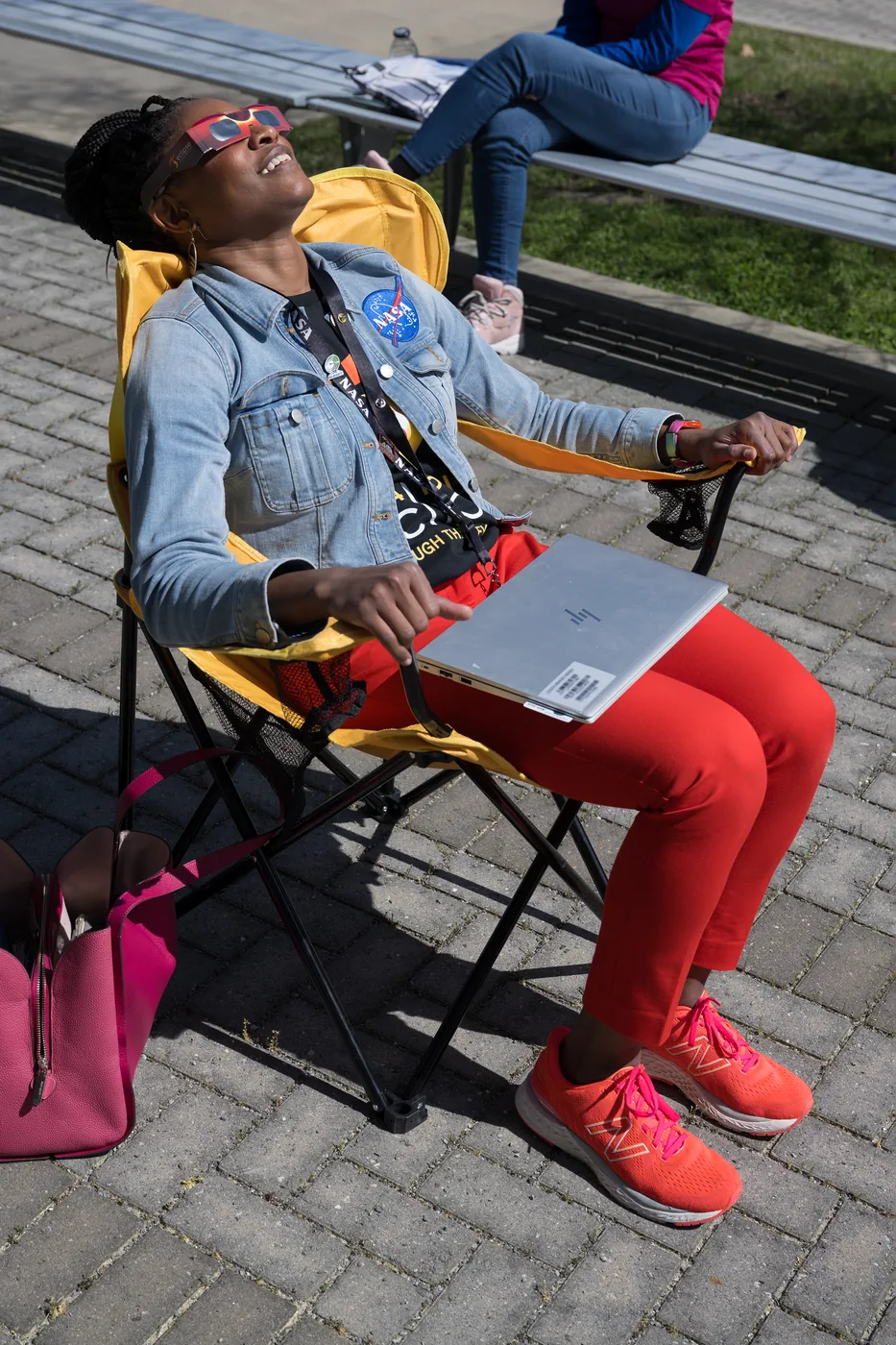
Never look directly at the Sun without proper solar protection. In Granada the eclipse is partial throughout: even when light drops sharply, the Sun never fully disappears and remains dangerous for your retina.
These do NOT protect you:
- ordinary sunglasses, even stacked;
- smoked glass, X-rays, CDs or photographic negatives;
- homemade filters;
- looking through a phone screen as if it were a filter.
Valid options (if certified and undamaged):
- solar eclipse glasses;
- proper solar viewers;
- correctly set up indirect projection.
Check glasses for scratches, holes or tears. The IGN publishes safe-viewing advice on its solar-eclipse page.
Binoculars, telescopes and cameras
Never look at the Sun through binoculars, a telescope or a camera lens without a dedicated solar filter in front of the optics. Lenses concentrate radiation and can cause severe injury in seconds.
Eclipse glasses in front of your eyes do not make it safe to look through binoculars or a telescope. For photography, use filters made for your equipment; do not improvise.
Watching with children
- Constant supervision — do not let them remove protection while looking at the Sun.
- Explain beforehand that the eclipse is exciting but the Sun remains dangerous without proper glasses.
- Organised activities — if you lack experience, Parque de las Ciencias or indirect projection are calmer options.
- Indirect projection — a pinhole in card or a colander can project the Sun onto a white surface without looking up.
- Fit of glasses — make sure they sit properly on smaller faces.
Photographing the eclipse
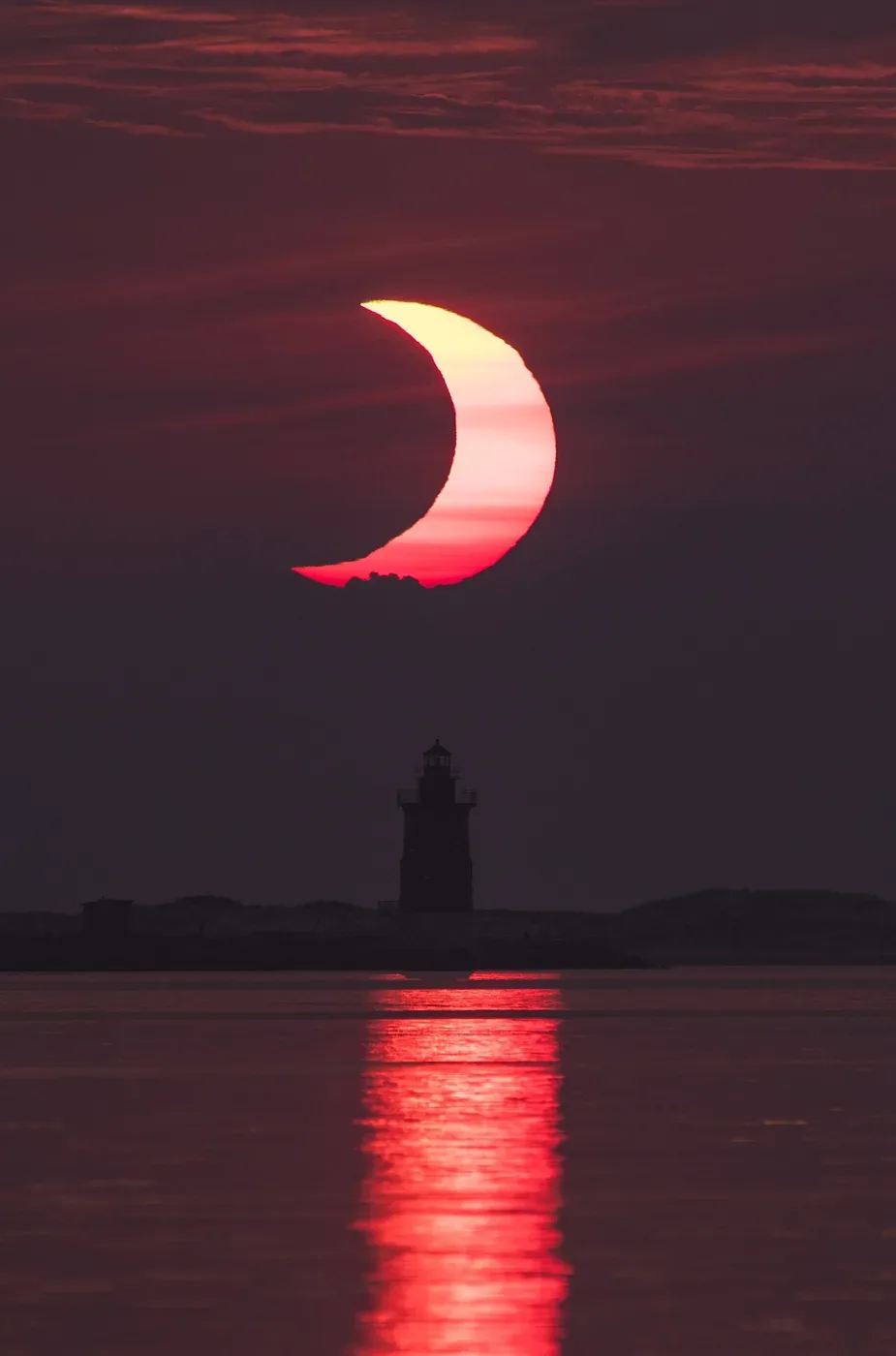
From Granada the Sun was low, which allowed compositions with rooftops or urban silhouettes where the western horizon was open. While the photosphere was visible, a solar filter was required on the lens. Do not look through an optical viewfinder without proper protection.
A tripod helps with the low Sun and changing light. Scout your composition in advance. We do not publish universal exposure values: they depend on gear, filters and real conditions.
Weather forecast for the eclipse in Granada
For that day, general cloud cover was not enough: the western horizon around 20:30 was decisive. A clear sky overhead would not have helped if clouds or terrain had hidden the Sun at the horizon.
Eclipse and Perseids in Granada: afternoon and night of 12 August
The night of 12–13 August also coincided with the peak of the Perseids. The IGN placed maximum activity between 04:00 and 06:00 on the 13th, with intense activity possible from 23:00 on the 12th until 11:00 on the 13th.
2026 was especially favourable because the eclipse occurred at new Moon: that night there was no bright Moon washing out the meteors as in other years.
| Event | When | How to watch |
|---|---|---|
| Solar eclipse | Afternoon of 12 August | Solar protection mandatory; clear western horizon |
| Perseids | Night of 12–13 August | Dark sky, naked eye; no telescope needed |
Wednesday 12 was one of Granada's most interesting astronomical days of 2026. The safety reference for that date was clear: do not mix methods; solar glasses for the eclipse, darkness and patience for the Perseids.
For more free plans that day, see our free things to do in Granada guide. To fit the eclipse into a full day, use Plan. For timed activities, check GRN URBAN’s events calendar.
Why the 12 August 2026 eclipse matters
12 August 2026 was the first total solar eclipse visible from mainland Spain in more than a century. The path of totality crossed the country west to east; Granada lay in the partial zone, but the event drew national attention and travel.
From Granada the practical keys were to understand that there would be no totality and to choose a spot with a clear western horizon for the final phases as the Sun grazed the horizon.
And in 2027 Granada will have an even bigger eclipse
On 2 August 2027 another total solar eclipse will occur. Unlike 2026, the 2027 path of totality will affect southern Spain and reach southern sectors of Granada province.
GRN URBAN preserves 2026 as a historical section in this same evergreen guide. No new URL will be created for 2027: its times, visibility and recommendations will be added here only once officially verified and will be clearly separated from the 2026 record.
Official sources
Sources
- National Geographic Institute — total solar eclipse of 12 August 2026 · Instituto Geográfico Nacional Official astronomical data
- AEMET — Granada forecast · AEMET Near-date weather consultation
Information checked on 13 August 2026. The latest official information prevails.
Add GRN URBAN as a preferred source
When you do, our latest guides and agenda updates appear more often in Top Stories and for you on Google.
Official Google setting · one tap · reversible