
- Culture
- 6 min read
- Updated 2 Sept 2026
Granada's 2026 Carocas have already taken place during Corpus week. This distinctive tradition combines caricature, satirical quintillas and local current affairs in Plaza Bib-Rambla. This same guide will be updated when the next edition's dates are announced.
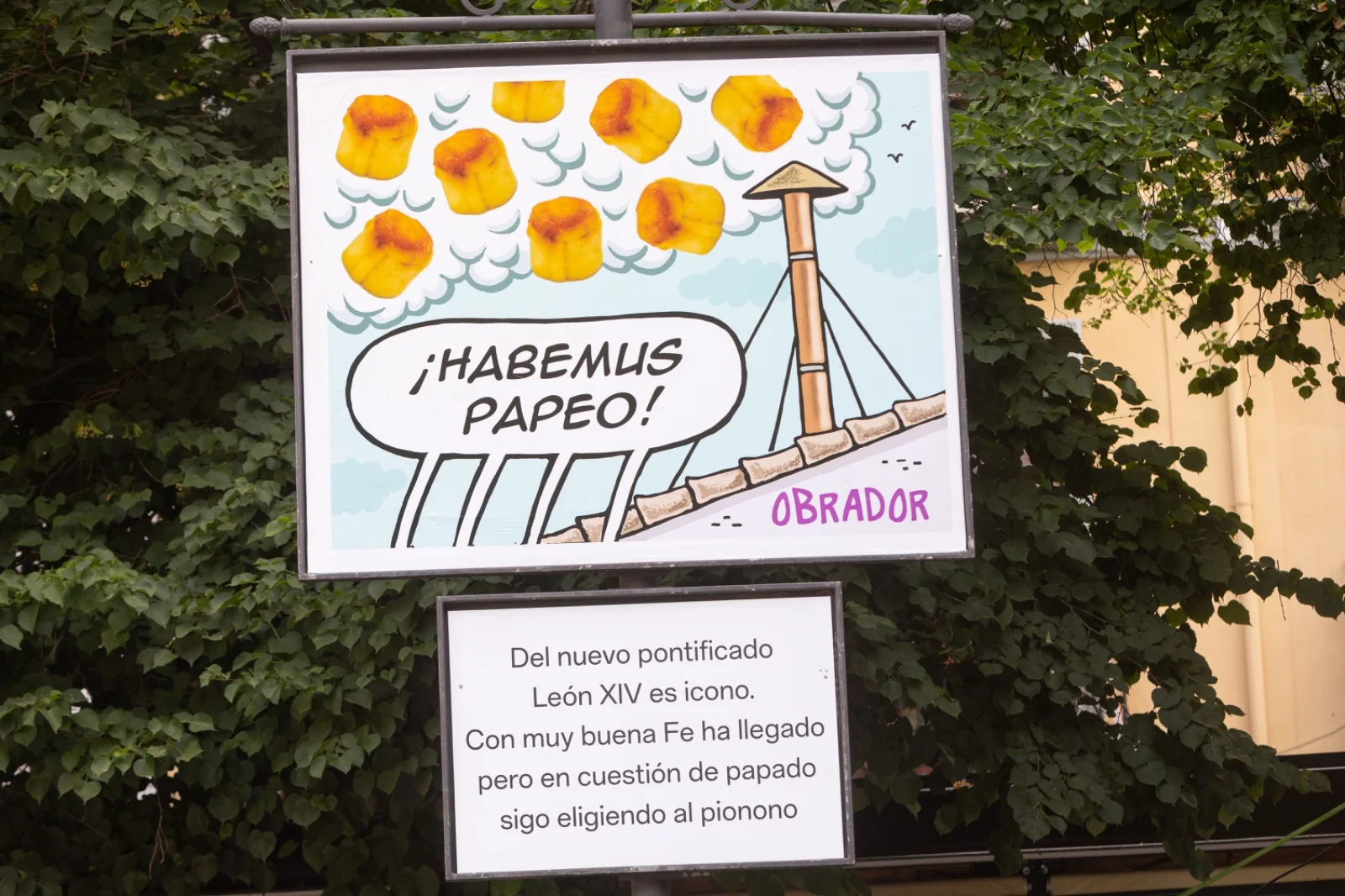
In the 2026 edition, the exhibition was displayed in Bib-Rambla from 3 to 7 June. The official programme and local media covered both the winning quintilla and themes satirised that year, from the AVE station to the low-emission zone, the metro and the City of Justice project. This guide is based on the Granada City Council tourism page, the official 2026 Corpus programme, the 2026 municipal contest notice, the University of Granada CLM competition page, and local coverage from Granada Hoy and Radio Granada - Cadena SER.
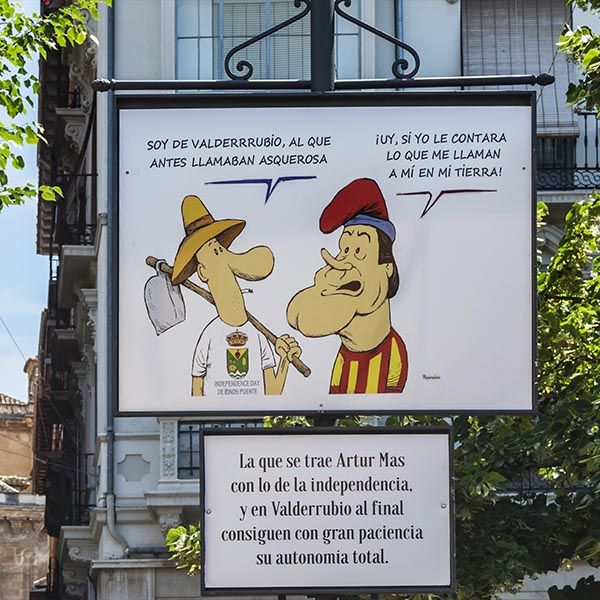
What the Carocas of Granada are
The Carocas are panels that combine a caricature-style drawing with a quintilla, a five-line verse form used to comment with irony on the most talked-about events of the year. The most useful official definition comes from Granada's municipal tourism site: they are quintillas that reflect, with humour and cynicism, the problems, complaints and public issues that have concerned locals throughout the year, and the City Council selects twenty of them for public display in Plaza Bib-Rambla during Corpus week.
From the outside, they can look like a small side tradition. In practice they are not. The Carocas work as a kind of popular editorial page of Corpus week: they condense Granada's sarcasm, wit and sharp local commentary into a format that anyone can walk through, for free, in the historic centre.
Where to see the Carocas in Granada in 2026
The short answer is simple: Plaza Bib-Rambla, right in the historic centre. The official Corpus 2026 programme lists the Carocas Exhibition on several days of the week, and Bib-Rambla remains one of the main stages of the central-city Corpus programming, alongside children's activities, puppets and family events.
| Day | Place | Hours listed in the 2026 programme |
|---|---|---|
| Wednesday 3 June | Plaza Bib-Rambla | 11:00 to 14:00 and 17:30 to 19:00 |
| Thursday 4 June | Plaza Bib-Rambla | Until the procession ends |
| Friday 5 June | Plaza Bib-Rambla | 10:00 to 13:30 and 18:00 to 21:30 |
| Saturday 6 June | Plaza Bib-Rambla | 10:00 to 13:30 and 18:00 to 21:30 |
| Sunday 7 June | Plaza Bib-Rambla | 10:00 to 22:00 |
Local reporting on the 2026 edition confirmed the exhibition's inauguration: Bib-Rambla hosted the quintillas and Carocas through the central stretch of Corpus, from 3 to 7 June.
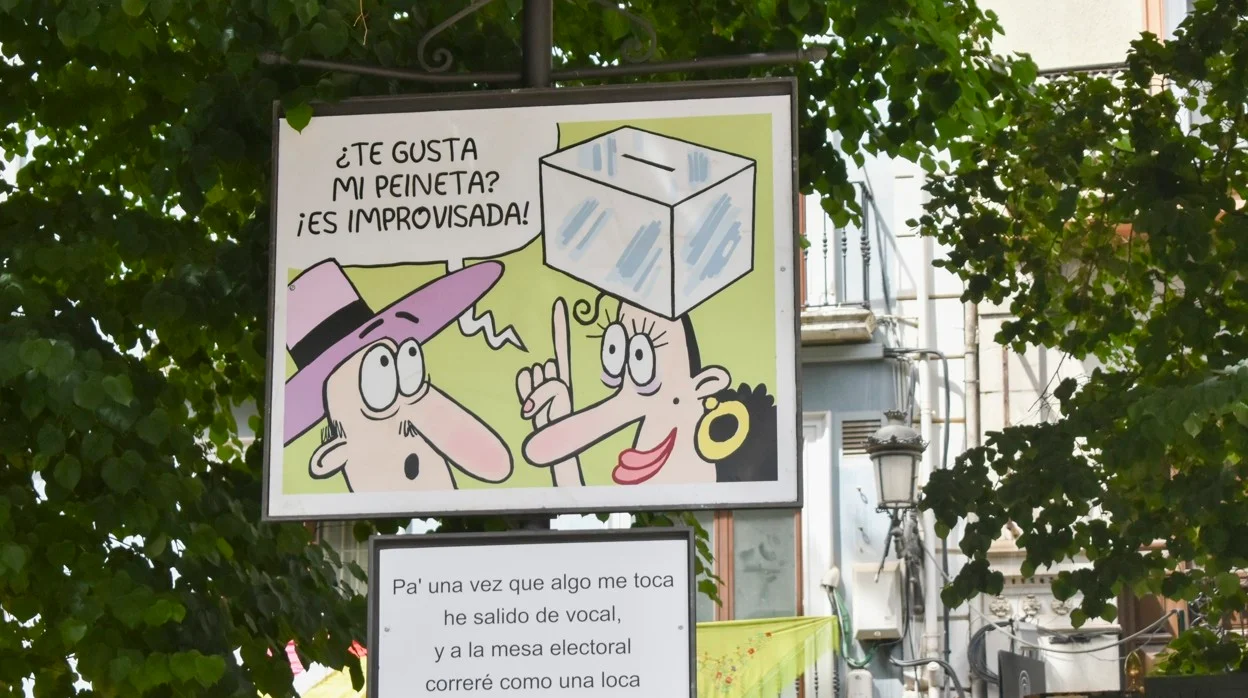
How the quintillas work
The quintilla is a traditional Spanish verse form made up of five eight-syllable lines with consonant rhyme across two rhyme groups. The University of Granada's CLM, which now runs its own contest inspired by the tradition, summarises the basic rules clearly:
- Five lines of eight syllables each.
- Consonant rhyme using two main rhyme endings.
- No three consecutive lines may share the same rhyme.
- The poem must not end in a couplet, so the final two lines cannot rhyme together.
- No line can be left unrhymed.
In the Corpus Carocas, that structure is not used for solemn poetry. It is used to deliver a sharp point quickly. The best Carocas are the ones that land fast, read easily and turn a local issue into a memorable public joke.
Origins and history: two layers matter
There are two historical layers that are often blurred together. Local historical coverage points out that in the 17th century Granada's Corpus celebrations already included ephemeral decorations, painted scenes and short texts linked to Plaza Bib-Rambla. That is the older root of the tradition.
The modern satirical Caroca, however, is usually dated to 1845. Granada Hoy notes that the first clearly identified example in the current critical style was placed furtively as a jab at the government of Isabella II. That distinction matters: the tradition is older, but the biting civic format people recognise today takes shape in the 19th century.
Contest, selection and public display
The Carocas do not simply appear without process. Each year there is a municipal quintilla contest. The 2026 City Council notice kept the structure intact: a jury selected twenty quintillas; those texts were then illustrated and displayed as Carocas on public panels in Plaza Bib-Rambla during the official Corpus days.
That detail matters for both visitors and search intent. If someone searches for the Granada Carocas contest, the useful answer is that the City Council runs the contest and the visible result is a public exhibition of twenty selected works. This is not a private or improvised display. It is part of the official Corpus Christi programme of Granada.
Themes in the 2026 Carocas
The 2026 edition showed that the format remained tightly connected to current affairs. Local reporting from 1 June 2026 highlighted a winning quintilla dedicated to former Culture and Tourism councillor Juan Ramon Ferreira, while other Carocas addressed issues such as the railway station, the low-emission zone, the City of Justice, the metro and the situation of Granada CF.
That is exactly what keeps the tradition alive. The Carocas do not survive on nostalgia alone. They survive because they still work as an annual satirical civic digest of Granada.
Why the Carocas matter within Granada Corpus
Granada Corpus has several layers: religious, fairground, family-oriented and popular. The Carocas belong to that last layer. They are the civic and satirical counterpoint to the solemnity of the Thursday procession and to the more visual public spectacle of the Tarasca.
If you want to understand Corpus with any depth, it is not enough to go to the Almanjayar fairground at night. You also need to stop in Bib-Rambla, read the verses, watch how locals comment on them and notice that this is still one of Granada's most recognisable ways of speaking in public. For the fairground side of the celebration, pair this guide with our Granada Corpus Fair 2026 guide.
How to visit the Carocas well
- Go in the morning or late afternoon if you want more space to read them properly.
- Do not treat Bib-Rambla as an isolated stop: combine it with tapas around Romanilla, Navas or Pescaderia.
- On Wednesday 3 June 2026, the Carocas could be combined with the Tarasca in the same central daytime slot.
- On Thursday 4 June 2026, the exhibition formed part of the historic centre's traditional atmosphere before and after the Corpus procession.
- If you want the most local reading of the exhibition, remember that many texts depend on knowing Granada's recent issues.
FAQ about Granada's Carocas
What are Granada's Carocas
They are Corpus compositions that combine a caricature-style image with a satirical quintilla about local current affairs.
Where do you see the Carocas in Granada
They are displayed in Plaza Bib-Rambla, in Granada's historic centre, during Corpus week.
How many Carocas are displayed
The municipal tourism page and the contest structure agree on twenty selected works.
Are the Carocas free to visit
Yes. The Bib-Rambla exhibition is free and public.
When were the 2026 Carocas on display?
In 2026, they were displayed in Plaza Bib-Rambla from 3 to 7 June, as part of the official Corpus programme.
Quick summary
If you only need the short version: Granada's Carocas are a Corpus tradition that mixes satirical quintillas, caricature and current affairs; they are displayed in Plaza Bib-Rambla; and the City Council selects twenty each year. In 2026 they focused on the city's biggest issues, from Ferreira to the AVE station, the low-emission zone and the metro, and were displayed from 3 to 7 June.
Sources
- Granada City Council — Corpus 2026 official programme · Ayuntamiento de Granada Official dates and programme
- Granada Tourism — Carocas · Turismo de Granada Tradition context
Information checked on 7 June 2026. The latest official information prevails.
Add GRN URBAN as a preferred source
When you do, our latest guides and agenda updates appear more often in Top Stories and for you on Google.
Official Google setting · one tap · reversible