
- Culture
- 11 min read
- 17 Aug 2026
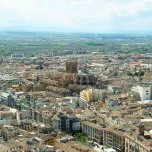
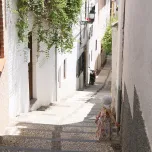
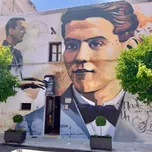
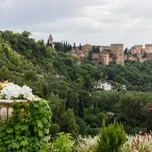
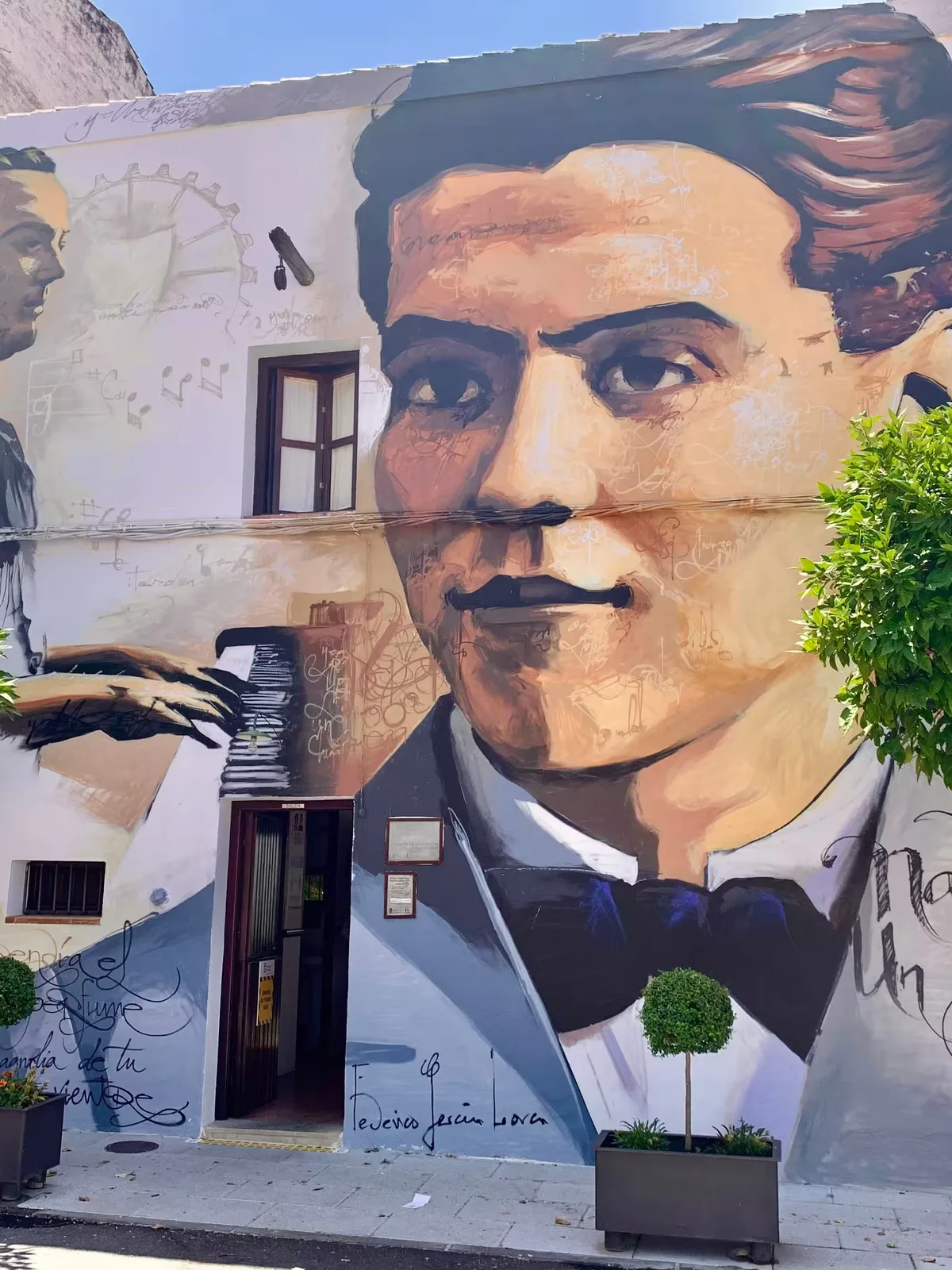
Lorca does not occupy a single museum in Granada. His biography is spread across a summer house, a university, former cafés, the Vega plain and several memory sites. This guide orders those places and explains which ones are worth visiting today.
Quick answer: Federico García Lorca was born in Fuente Vaqueros (the Vega), not in Granada city. In the capital you will find Huerta de San Vicente (summer house and museum), the Centro Federico García Lorca (archive and exhibitions), university traces, the Rinconcillo café circle and sites linked to his last days. To walk the urban core: GRN route in Granada.
1. Lorca and Granada in two minutes
Federico García Lorca (1898–1936) is Granada’s best-known writer, but he was not born in the city: he was born on 5 June 1898 in Fuente Vaqueros, on the Vega plain. Granada was where he studied, debated, spent family summers and created; the Vega shaped his childhood and rural imagination.
Today his presence is read through museums, archives, streets, the university and memory sites. There is no single “Lorca museum”: there is a network of places with different roles. The key is knowing which one answers which question.
2. Map of Lorca-related places
Places shown (10)
- Huerta de San Vicente
- Centro Federico García Lorca
- Parque Federico García Lorca
- Chikito
- Hospital Real
- Casa-Museo Manuel de Falla
- Mirador de San Nicolás
- Birth house · Fuente Vaqueros
- Valderrubio
- Federico García Lorca Park · Alfacar
- Granada city
- Centre and university
- Realejo and Albaicín
- The Vega
- Memory (province)
Fuente Vaqueros, Valderrubio and Alfacar require transport. The urban GRN route covers Granada city only.
The map summarises geography: city, Vega and memory. Practical detail is in the table and each section.
3. Which Lorca places are worth visiting
| Place | Area | Why it matters | Visit | Time | Booking | City / province |
|---|---|---|---|---|---|---|
| Huerta de San Vicente | Ronda | Family summer house; key works written here | Check official opening status | 45–60 min | Recommended | City |
| Centro Federico García Lorca | Centre | Archive, library, exhibitions | Yes | 45–90 min | Exhibitions: capacity | City |
| Birth house | Fuente Vaqueros | Birth and early childhood | Yes | 45–60 min | Check | Province (Vega) |
| Valderrubio | Valderrubio | Childhood, youth, Bernarda Alba | Yes (2 museums) | 2–3 h | Check | Province (Vega) |
| Víznar / Alfacar | Hills | Memory of the last days | Institutional route ~3 km | Half day | Usually none | Province |
| Rinconcillo / Campillo | Centre | Young writers’ gathering (Café Alameda) | Exterior / current venue | 15 min | No | City |
| Casa Museo Manuel de Falla | Realejo | Lorca–Falla friendship, cante jondo | Yes | 45 min | Recommended | City |
| University / Law Faculty | Cartuja–Triunfo | Studies; Civil Government area | Exterior / academic hours | 20–30 min | No | City |
If you only visit one place
Huerta de San Vicente — when the house-museum is open, it is the city’s most intimate literary visit.
If you care about manuscripts, archive or contemporary art
Centro Federico García Lorca — temporary exhibitions and documentary holdings.
If you want to understand his childhood
Fuente Vaqueros + Valderrubio — a Vega excursion, not part of the urban walking route.
If you want to walk the city
GRN route in Granada — walkable urban core; Huerta as an add-on by bus.
If you are interested in 1936 memory
Víznar and Alfacar — treated with respect; not “death tourism”.
4. Huerta de San Vicente
The García Lorca family bought this summer home in 1925 and began spending summers there from 1926. In 2026 Granada marks the centenary of that first family stay, with cultural programming, agricultural recovery and the first Huerta de San Vicente International Poetry Competition.
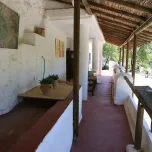
Federico wrote and revised major works at the Huerta —including Gypsy Ballads and Blood Wedding—. The site includes the house-museum, the surrounding urban park and, after 2026 works, part of the historic huerta (traditional crops, fruit trees, irrigation).
Hours and prices (general)
- Summer (1 Jun – 30 Sep): Tue–Sat, 9:00–15:00.
- Winter (1 Oct – 31 May): Tue–Sat, 10:00–17:00.
- Admission: adult €3; children 6–12, students up to 26 and pensioners €1.
- First two hours on Tuesday are often free. Limited capacity and timed entry.
Always confirm on the official website: the filming closure changes the current situation.
2026 highlights (Huerta)
- Noches de Cine en la Huerta — Wednesdays 18 August to 16 September. Event: Noches de Cine Huerta de San Vicente.
- Huerta de San Vicente International Poetry Competition — first edition; deadline 21 September 2026.
- Laura Marchal — concert planned 24 September 2026.
5. Centro Federico García Lorca
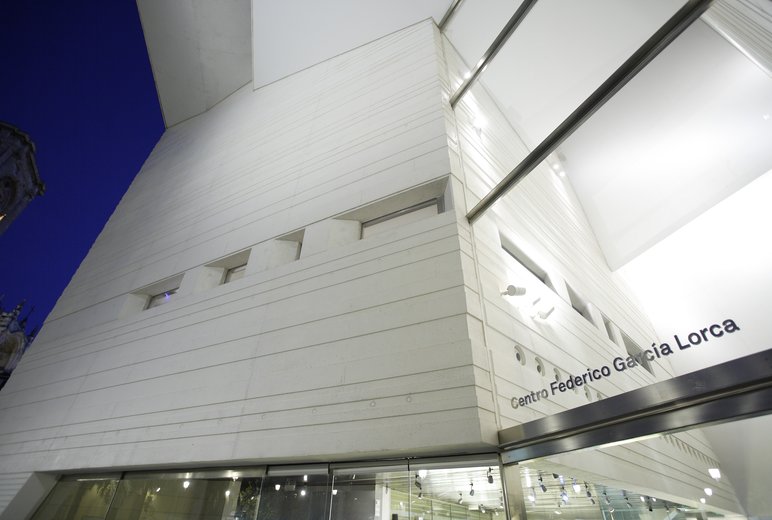
On Plaza de la Romanilla, beside the Cathedral. Not the Huerta: manuscripts, correspondence, photographs, drawings and the specialised library are kept and studied here, along with cultural programming.
The archive and library have their own hours and, for some services, appointment-based access. Temporary exhibitions follow museum summer/winter schedules.
Current exhibition: RÍOS (Cruzar el Archivo Lorca)
Curated by Francisco Ramallo. 24 April – 18 October 2026. Free entry until capacity is reached. Event: RÍOS (Cruzar el Archivo Lorca).
6. Fuente Vaqueros
Lorca was born on 5 June 1898 in Fuente Vaqueros, on the Vega de Granada. His birth house is now a museum and seat of the Diputación’s Patronato Federico García Lorca.
Address: Calle del Poeta Federico García Lorca, 4, Fuente Vaqueros.
Expect a 20–30 minute trip from Granada city by bus or car.
7. Valderrubio
Part of Lorca’s childhood and youth took place in the municipality historically called Asquerosa —a place name local documentation explains without sensationalism— now Valderrubio.
- Casa Museo Federico García Lorca — family home.
- Casa de Bernarda Alba — linked to Francisca Alba Sierra’s family, which inspired part of The House of Bernarda Alba. Museum since 2018.
Do not confuse the real house with the stage set: reality, inspiration and dramatic construction are distinct layers.
8. University and El Rinconcillo
Studies at the University of Granada
Federico studied Law and Arts at the University of Granada, with teachers such as Fernando de los Ríos and Martín Domínguez Berrueta.
Institutional sources differ slightly on when university studies began (some say 1914, others 1915). Without primary academic documentation, this guide does not pick an arbitrary year.
El Rinconcillo: Café Alameda and the Campillo
The Café Alameda gathering, known as El Rinconcillo, was central to young Lorca’s formation. Writers, artists and professors met there —including Falla, Gerardo Diego and Ángel Barrios—.
The historic café stood near Plaza del Campillo. Today Restaurante Chikito occupies a premises on the square and keeps Rinconcillo memory inside, but it is not a direct gastronomic continuation or a museum: treat it as historical reference, not an automatic dining recommendation.
9. Lorca and Manuel de Falla
The friendship and collaboration between Lorca and Falla is a cultural axis of 1920s Granada. They shared an interest in cante jondo and took part in the 1922 Cante Jondo Competition, promoted by Falla with support from institutions and flamenco figures.
The Casa Museo Manuel de Falla (Calle Antequeruela Alta, 11) preserves the carmen where the composer lived from 1922 to 1939.
10. Granada in his work
Granada and the Vega are not backdrop in Lorca’s work: they are childhood, language, landscape and memory. Poems in Poet in New York contrast with the solar Granada of Gypsy Ballads; theatre recovers family and social atmospheres of the Vega.
This guide is not literary criticism. Visiting Fuente Vaqueros, Valderrubio and the Huerta clarifies readings that from outside can seem merely “Andalusian” or “rural”.
11. The last days
Chronology according to the Centro Federico García Lorca (checked August 2026):
- 14 July 1936: Federico returns to Huerta de San Vicente.
- 18 July 1936: military coup.
- 9 August: seeks refuge at the Rosales house.
- 16 August: arrested and taken to the Civil Government.
- Later transferred to Víznar.
- Killed between the night of 18 and 19 August 1936 near Víznar and Alfacar —institutional sources do not allow greater precision on the exact hour.
Casa de los Rosales
Luis Rosales offered refuge at his home on Calle Angulo (Realejo area). Federico was arrested there. The building is not a public museum today; its value is historical and memorial.
Former Civil Government
After arrest, Federico was held at Granada’s Civil Government. Memory research places that space near today’s Law Faculty campus (Plaza de la Universidad), without a consensus exact pin for visitors. Treat it as context, not a scenic stop.
12. Víznar and Alfacar
The end of Lorca’s life lies outside Granada city. An institutional route of about 3 km crosses Víznar and Alfacar, including the Víznar gorge area, Peñón del Colorado, Alfacar’s Federico García Lorca Park and Fuente Grande / Aynadamar.
13. Lorca in Granada in 2026
Temporal section — last checked: 17 August 2026. After October it may read as an archive of commemorations.
Programme checked on 17 August 2026
- Huerta de San Vicente centenary (1926–2026) — cultural programming and agricultural recovery into autumn.
- 90th anniversary of the killing — August 2026; memory events in Alfacar and the province.
- RÍOS (Cruzar el Archivo Lorca) — Lorca Centre, until 18 Oct 2026. Event page.
- Noches de Cine en la Huerta — until 16 Sep 2026. Event page.
- Exhibition “Federico García Lorca: 1898-1936. Así que pasen 90 años” — Zaidín-Vergeles library, 22 Jun – 30 Sep 2026.
- Lorca y Granada at the Generalife Gardens — 25th edition, 31 Jul – 29 Aug 2026.
- Huerta de San Vicente International Poetry Competition — deadline 21 Sep 2026.
Programme announced after 17 August 2026
- Omega, 30th anniversary — Kiki Morente, Lagartija Nick and Israel Galván, 27–29 Aug 2026, Generalife Theatre.
- Huerta house-museum — reopening was announced for 1 Sep 2026; check its current status.
- Laura Marchal — 24 Sep 2026, Huerta de San Vicente.
Already held
- Las gitanas cantan y bailan a Lorca (Manuela Carrasco et al.) — 31 Jul – 15 Aug 2026.
- Tierra bendita. Tierra vieja del candil (Ballet Flamenco de Andalucía) — 19–22 Aug 2026.
- 50th anniversary of the first public tribute (1976) — Pozo de Plata 2026 to the Comisión de los 33 in Fuente Vaqueros.
Omega (Enrique Morente, 1996) remains an example of how Lorca’s work crosses flamenco, rock and contemporary music —which explains the Generalife cycle’s closing tribute.
14. Planning a Lorca visit
- Decide whether your priority is the city (Huerta + Centre + urban route) or Vega + memory (excursion).
- Check Huerta status the same day — temporary closure and timed entry.
- Book the Lorca Centre if an exhibition has limited capacity.
- For the Vega: combine Fuente Vaqueros and Valderrubio in a half day with transport.
- Víznar/Alfacar: separate half day; memory, not attraction.
For the wider city: What to see in Granada, Granada in one day, flamenco. Current cultural identity: Granada 2031.
15. GRN route in Granada
The Federico García Lorca route in Granada walks the urban core: Huerta (or bus access), Campillo/Rinconcillo, Lorca Centre, Trinidad, Law Faculty, Casa de los Rosales, Manuel de Falla and San Nicolás viewpoint as an optional finish.
About 5.6 km on the full version; 2–2.5 h walking only; 4–5 h with museum entries.
If you want to continue: Lorca in the Vega
Fuente Vaqueros and Valderrubio require transport. The Provincial Patronato maintains an official Vega route; we do not duplicate it here. Plan a half or full day combining birth house, Valderrubio and other Patronato stops if interested.
16. Half day / one day / two days
| Window | Sensible plan |
|---|---|
| Half day | Lorca Centre + Rinconcillo + one entry (Huerta or Falla if time allows) |
| One day | Urban GRN route with Huerta and Centre; free evening or Generalife if there is a show |
| Two days | Day 1: city + route. Day 2: Vega (Fuente Vaqueros + Valderrubio) or memory (Víznar/Alfacar) |
17. Frequently asked questions
Where was Federico García Lorca born?
In Fuente Vaqueros (Vega de Granada), on 5 June 1898. Not in Granada city.
Where is Lorca’s house in Granada?
The family house in the city is Huerta de San Vicente (summer residence). The birth house is in Fuente Vaqueros.
What is the difference between Huerta de San Vicente and the Lorca Centre?
The Huerta is house-museum and historic huerta. The Centre is archive, library and exhibitions on Plaza de la Romanilla.
Can you visit Huerta de San Vicente?
Yes, when open, with limited hours and capacity. Check current opening and available visits on the official website.
Where did Lorca study in Granada?
At the University of Granada, Law and Arts.
Where did Lorca meet other writers?
At Café Alameda / El Rinconcillo, near Plaza del Campillo.
Where was Federico García Lorca arrested?
At the Rosales house (Calle Angulo) on 16 August 1936; then at the Civil Government.
Where did Lorca die?
Between the night of 18 and 19 August 1936, near Víznar and Alfacar.
Is his burial place known?
No. His remains have not been found.
How do you do a Lorca route in Granada?
Use the GRN route in Granada. Fuente Vaqueros and Valderrubio are separate excursions.
Which Lorca places are outside Granada city?
Fuente Vaqueros, Valderrubio, Víznar and Alfacar.
What is being celebrated about Lorca in Granada in 2026?
Huerta centenary (1926), 90th anniversary of the killing, exhibitions, Generalife cycle and Huerta programming. See the 2026 section.
Walk Lorca in Granada: GRN route · What to see in Granada · Albaicín · Granada 2031
Sources
- Huerta de San Vicente — visitor information · Huerta de San Vicente House-museum visits and opening information
Information checked on 17 August 2026. The latest official information prevails.
Add GRN URBAN as a preferred source
When you do, our latest guides and agenda updates appear more often in Top Stories and for you on Google.
Official Google setting · one tap · reversible