

- Guides
- 10 min read
- Updated 16 Aug 2026
If this is your first time in Granada, start with the Alhambra, the historic centre, the Albaicín and Sacromonte. This is not an itinerary: it helps you decide what earns your time, what can wait, and which guide to open next. To see what is happening during your visit, also check the Granada events agenda, updated with upcoming dates.
If it is your first time in Granada, start with these 7
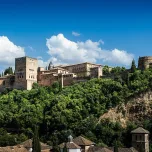
- Alhambra and Generalife
- Albaicín (as a neighbourhood, not a single building)
- Carrera del Darro and Paseo de los Tristes
- Cathedral and Royal Chapel
- An Albaicín viewpoint (San Nicolás is the best-known reference)
- Sacromonte
- Tapas and Granadian food culture
If you have more time
- Realejo
- El Bañuelo and Andalusian heritage
- Monasterio de la Cartuja
- San Jerónimo
- Imperial Granada in 1526 — Charles V and Isabella of Portugal guide
- Huerta de San Vicente
- Parque de las Ciencias
- Cuarto Real de Santo Domingo
- Sacromonte Abbey
Places shown (15)
- Alhambra
- Catedral de Granada
- Capilla Real de Granada
- Corral del Carbón
- Paseo por la Carrera del Darro
- Albaicín
- Mirador de San Nicolás
- El Bañuelo
- Sacromonte
- Abadía del Sacromonte
- Cuarto Real de Santo Domingo
- Paseo por el Realejo
- Monasterio de la Cartuja
- Parque de las Ciencias
- Huerta de San Vicente
- Alhambra
- Historic centre
- Darro / Albaicín
- Sacromonte
- Realejo
- Beyond the core centre
Granada has steep slopes. Some sights require a deliberate trip beyond the core walk.
Decision table: what to see and how to prioritise
Use this table to compare options, not to plan minute by minute. Times are approximate, and you set the exact order to suit your own pace.
| Place | Priority | Approx. time | Booking? | Area |
|---|---|---|---|---|
| Alhambra and Generalife | Essential | 3–4 h | Yes, essential | Alhambra |
| Albaicín | Essential | 2–3 h | Usually not needed | Albaicín |
| Carrera del Darro / Paseo de los Tristes | Essential | 45–90 min | Usually not needed | Darro |
| Cathedral and Royal Chapel | Essential | 1.5–2.5 h | Recommended | Centre |
| Albaicín viewpoint | Essential | 30–60 min | Usually not needed | Albaicín |
| Sacromonte | Essential | 1.5–2.5 h | Usually not needed | Sacromonte |
| Tapas | Essential | Flexible | Usually not needed | Various |
| El Bañuelo | Highly recommended | 20–30 min | Recommended | Darro |
| Realejo | Highly recommended | 1–2 h | Usually not needed | Realejo |
| Monasterio de la Cartuja | Highly recommended | 60–75 min | Recommended | Cartuja |
| San Jerónimo | Highly recommended | 45–60 min | Recommended | Triunfo |
| Huerta de San Vicente | Highly recommended | 45–60 min | Recommended | Ronda |
| Parque de las Ciencias | Highly recommended | 3–4 h | Recommended | Ronda |
| Cuarto Real de Santo Domingo | By interest | 30–45 min | Recommended | Realejo |
| Casa de Zafra | By interest | 30–40 min | Recommended | Albaicín |
| Sacromonte Abbey | By interest | 45–60 min | Recommended | Sacromonte |
If you can only see 5 things
- Alhambra
- Albaicín
- Cathedral + Royal Chapel
- Carrera del Darro
- An Albaicín viewpoint or Sacromonte, depending on time and energy
Not a universal law — if you already know the Alhambra, the order changes. But on a short first visit, this set covers heritage, neighbourhood, centre and a view that explains why Granada works on foot.
Granada essentials
- Alhambra and Generalife. The visit that defines the city. Book before you travel.
- Albaicín. Medieval hillside district facing the Alhambra. You walk it — you do not “tick it off” in twenty minutes.
- Carrera del Darro. The great urban promenade linking centre, valley and hill access.
- Cathedral and Royal Chapel. Two buildings, one visit decision in the heart of the centre.
- Albaicín viewpoints. Each offers a different orientation and atmosphere. San Nicolás is the best-known.
- Sacromonte. A different experience from the Albaicín: caves, landscape and Granadian flamenco tradition.
- Food culture. Tapas are part of the city experience, not an optional extra.
The Alhambra: book this first
For a first visit, the Alhambra is usually the booking to make first. The main complex includes the Alcazaba, Nasrid Palaces, Generalife and associated spaces depending on ticket type. The current official general visit combines Alcazaba + Nasrid Palaces + Generalife.
The Alhambra and Generalife were inscribed as UNESCO World Heritage in 1984. The site was extended in 1994 to include the Albaicín. The current name is Alhambra, Generalife and Albayzín, Granada. UNESCO describes both hills as complementary medieval urban realities separated by the Darro — the whole city is not World Heritage.
The general visit currently costs €22.27 through the official Alhambra and Generalife Board channel (verified 9 August 2026). Prices change: always check the official source before travelling.
Your assigned Nasrid Palaces time slot is fixed. Access control is strict — organise the rest of the visit around that window. Inside the complex, the Palace of Charles V and Generalife Theatre host concerts and cultural events with their own tickets, separate from general admission.
The Albaicín: a neighbourhood, not a monument
The Albaicín is not reducible to one building or one viewpoint. It is a district with a medieval street plan, carmens, squares and steep lanes that UNESCO highlights for its urban fabric and mix of Moorish and traditional Andalusian architecture.
On a first visit, treat it as a neighbourhood experience: Plaza Nueva as the usual access from the centre, Carrera del Darro as the lower edge, Paseo de los Tristes as the climb towards the hill, and the interior streets as the core of the walk. Viewpoints are reference points, not the only reason to go up.
To go deeper: Albaicín guide and Albaicín walking route. This page is not a step-by-step route.
Carrera del Darro and Paseo de los Tristes
One of Granada's great urban walks. It links Plaza Nueva → Carrera del Darro → lower Albaicín → Paseo de los Tristes → access towards Albaicín and Sacromonte. It is the physical corridor between centre, valley and hills.
You do not need to treat it as a standalone monument: it is the axis that connects several visit decisions. From here you naturally reach El Bañuelo and the climb towards the viewpoints.
Granada Cathedral and Royal Chapel
They appear grouped in the main list because they stand side by side and solve one visit decision for many travellers. Here they are broken down separately, because each has its own identity.
Granada Cathedral
Linked to Charles I's imperial city project, the city presents it as Spain's first major Renaissance cathedral and the axis of the monumental centre together with the Royal Chapel, the Lonja and the Alcaicería.
Royal Chapel
It keeps its own identity. It holds the remains of Isabella I of Castile, Ferdinand II of Aragon, Joanna I, Philip I and Infante Miguel. There is a crypt beneath the tombs. The precise formulation is Isabella and Ferdinand, with other royal family members; "all the Catholic Monarchs are buried here" is an oversimplification.
Historic centre Granada
Nearby, the Alcaicería (historic commercial lanes linked to the silk market) and Corral del Carbón (Nasrid reference in the centre) complete the core without needing top-5 status. Check official sites for hours and prices.
Viewpoints: beyond San Nicolás
Mirador de San Nicolás is the best-known reference and one Granada Tourism places among essential experiences. But it is not the only one: San Cristóbal offers a wider panorama and can be a quieter alternative depending on the time; La Lona and La Chumbera add different perspectives.
Each viewpoint has different orientation, atmosphere and best time of day. For map, comparison and timing: Best viewpoints in Granada.
Sacromonte: another hill, another experience
It is not the Albaicín. The city characterises Sacromonte through cave homes, landscape, flamenco tradition, zambras, views, the Abbey and the Caves Museum.
Sacromonte is one of the fundamental historic spaces of Granadian flamenco and is especially associated with the zambra. "Flamenco was born here" is an oversimplification: the zambra is one of its Granadian roots, not its single origin.
Sacromonte is worth visiting even if you skip a flamenco show. For tablaos and context: Flamenco in Granada. To connect it with the Albaicín: walking route through the Albaicín.
Food: essential as an experience
Tapas are part of the Granadian experience. They are not just "eating free": each area has a different rhythm — centre, Realejo, Albaicín, residential districts — and the decision is where and when, not only how much you pay.
Full guide: Tapas in Granada: how they work, areas and prices.
Contemporary hammams are a different experience from El Bañuelo (historic heritage). Do not mix them: one is tourist wellness; the other is live archaeology.
Highly recommended if you have more time
El Bañuelo and Andalusian heritage
11th-century Arab baths at Carrera del Darro, 31. Among the oldest, most important and best-preserved of their kind in Spain. If the Alhambra draws you in, Casa de Zafra, Horno de Oro, Dar al-Horra and Cuarto Real offer a smaller-scale Andalusian Granada that can feel quieter depending on the time.
Realejo
Historic district between centre and the Alhambra hill. Excellent on foot: squares, heritage, street art and food. Connects with Cuarto Real de Santo Domingo.
Monasterio de la Cartuja
One of the finest examples of Spanish and Andalusian Baroque. Requires a deliberate trip — it is not part of the core tourist walk.
Monasterio de San Jerónimo
Strong choice for architecture, the conquest and Renaissance Granada. The city lists it among the great monasteries.
Huerta de San Vicente
Summer house of the García Lorca family, bought in 1925. Federico worked there on Romancero gitano and Blood Wedding. Limited capacity — check the official calendar.
Parque de las Ciencias
Interactive science museum (~70,000 m², opened 1995). Not "kids only": families, rain, longer stays and visitors who already know the historic core. BioDomo and Planetarium have limited capacity. Dedicated guide: what to do in Granada when it rains.
What to see by length of stay
One day
Prioritise the Alhambra (if you have a ticket), the centre and the Albaicín/viewpoint. The order and timing for those 24 hours are set out in Granada in one day.
Two days
The extra day allows Sacromonte, Realejo, Andalusian heritage and food at a calmer pace. Guide: What to see in Granada in 2 days.
Three days
You can add Cartuja, Lorca, Parque de las Ciencias or secondary heritage by interest. Build the third day with Plan, starting from the 48-hour guide.
What to see by interest
| If you are looking for | Prioritise |
|---|---|
| First visit | Alhambra, Albaicín, centre, viewpoint, Sacromonte |
| Andalusian history | Alhambra, Albaicín, Bañuelo, Casa de Zafra, Dar al-Horra, Cuarto Real |
| Christian art and architecture | Cathedral, Royal Chapel, Cartuja, San Jerónimo |
| Federico García Lorca | Huerta de San Vicente, Lorca Centre — Lorca in Granada guide |
| With children | Alhambra depending on age, Parque de las Ciencias, outdoor spaces. Rain: indoor plans |
| Rainy day | Museums, Parque de las Ciencias, exhibitions. Guide: Granada in the rain |
| Free Granada | Viewpoints, neighbourhoods, walks. Guide: Free things to do |
| Sunset | Viewpoints guide |
| Flamenco | Flamenco in Granada guide |
What to book before travelling
- Alhambra — top priority. Official Board channel.
- Flamenco — depending on show and date.
- Huerta de San Vicente — check availability due to limited capacity.
- Other monuments — assess by season; never assume availability without checking.
Before locking dates: Before you arrive in Granada. If you are driving, also see where to park in Granada: LEZ, car parks and centre access.
What does not need booking
Neighbourhoods, walks, squares and public viewpoints are open to explore, except for occasional restrictions. That does not mean every paid monument is free.
What to see for free in Granada
Examples that fit almost any visit:
- Public viewpoints in Albaicín and Sacromonte
- Carrera del Darro and Paseo de los Tristes
- Corral del Carbón (free entry)
- Walks through Albaicín and Realejo
- Alhambra woods (outside the paid complex)
Full guide: Free things to do in Granada.
Granada is not only the Alhambra
The Alhambra is the great monument, but understanding Granada also means the Albaicín as a living neighbourhood, the Christian historic centre, Sacromonte, Darro walks and food as an urban experience. The city is understood in layers, not through a single ticket.
If you already know the essentials
For a return visit or a slower second pass:
- Casa de Zafra — Nasrid domestic architecture and Albaicín interpretation centre
- Cuarto Real de Santo Domingo — Nasrid qubba in Realejo
- Dar al-Horra and Horno de Oro — smaller-scale Andalusian heritage
- Sacromonte Abbey — views over Alhambra, Albaicín and Darro
- Monasterio de la Cartuja — first-rate Baroque
Granada Tourism lists several of these among its "hidden gems". They are a deeper look at the city, not a substitute for the core, and they do not carry the same weight as the seven essentials.
More days? Day trips from Granada
Sierra Nevada, the Alpujarra, Costa Tropical, Guadix or provincial villages are excursions, not Granada capital essentials. They round out a longer trip without moving the focus away from the city itself.
Resources to organise your trip
- Where to stay in Granada — areas, map and trade-offs
- Before you arrive in Granada — bookings, access and logistics
- Granada in one day — order for 24 hours
- Granada in two days — 48-hour distribution
- Plan — itinerary by time and interests
- Routes — designed walks to follow
- Guides archive — go deeper by topic
Sources
- Patronato de la Alhambra y Generalife — official visit information · Patronato de la Alhambra y Generalife Planning an Alhambra visit
Information checked on 9 August 2026. The latest official information prevails.
Add GRN URBAN as a preferred source
An official Google setting that records your preference for GRN URBAN so Google can factor our coverage into Google News and Top Stories. Google decides how it is applied: it guarantees neither visibility nor position.
Official Google setting · reversible