
Description
Walking route through Charles V’s Granada: Puerta de Elvira, Renaissance centre, Hospital Real, San Jerónimo and the Palace of Charles V. About 4 km, 3–4 h outside or a half day with monument visits.
This route walks the Granada that still speaks of 1526: imperial entry, Renaissance institutions, university and a finish at the Palace of Charles V. It does not replace the monumental centre route — which focuses on Cathedral, Royal Chapel and San Jerónimo as a Renaissance trio — but adds Elvira, Chancillería, Madraza, Hospital Real and the climb to the Alhambra with historical context. About 3.9 km on foot; 3–4 hours outside or a half day with monument entries. For full historical context: <a href="/en/guides/carlos-v-granada-1526/">Charles V and Isabella of Portugal in Granada (1526) guide</a>.
- Duration
- 3h 30min
- Distance
- 3.9km
- Difficulty
- Moderate
- Best time to visit
- Morning
The itinerary
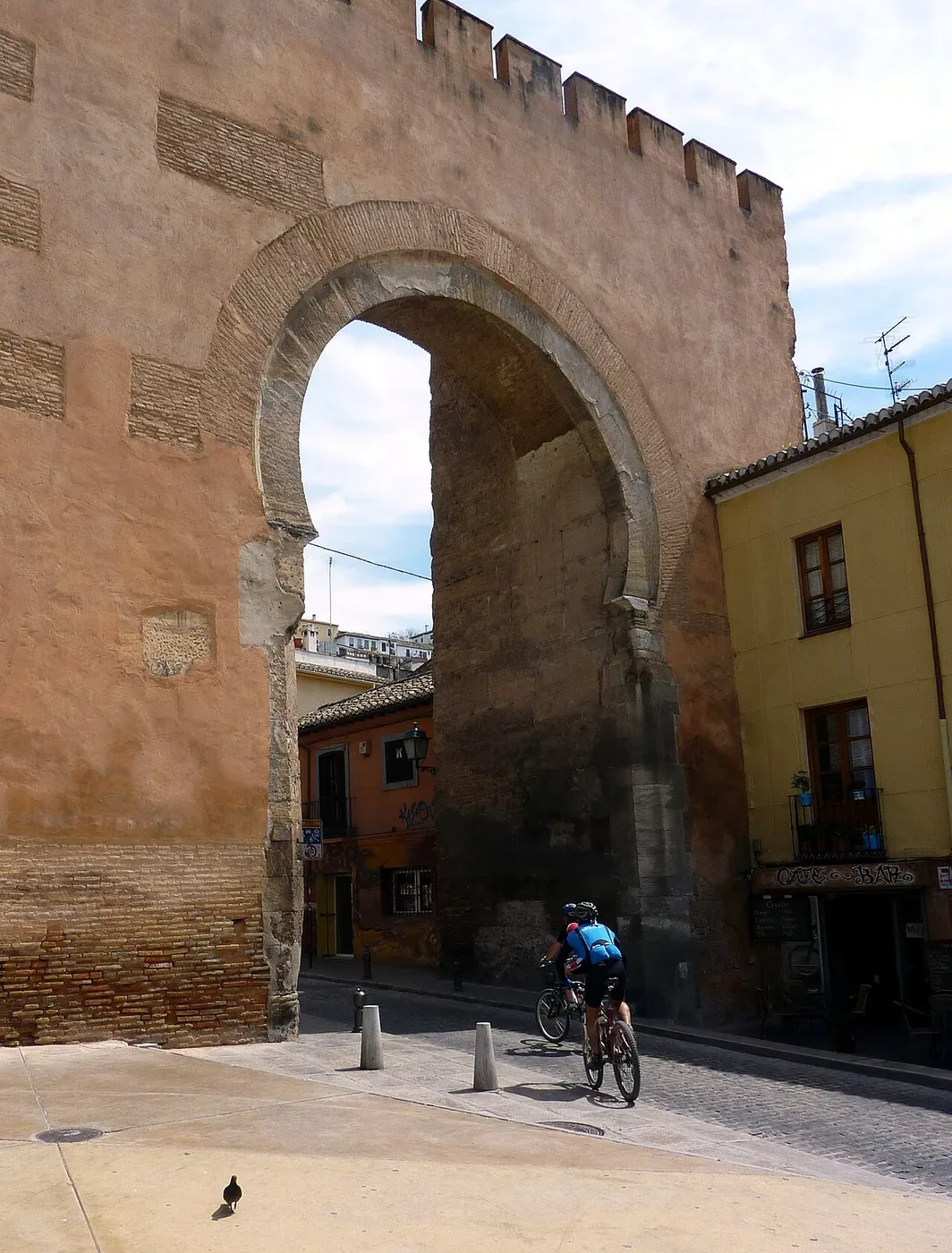
Puerta de Elvira — Plaza del Arco de Elvira
On 4 June 1526 Charles V and Isabella of Portugal made their solemn entry here. Before the altar raised for the occasion, the emperor swore to uphold Granada’s privileges. Today the arch marks the start of Calle de Elvira: not a museum, but the symbolic threshold of the imperial stay.
Real Chancillería — Plaza de los Lobos
Seat of Castile’s supreme court in Andalusia, built in the sixteenth century. During the 1526 stay Granada acted as the Empire’s judicial and administrative capital in the south; this building condenses that institutional role in Renaissance stone.
La Madraza — Calle Oficios
Former Nasrid madrasa converted after the conquest. By the sixteenth century the building was already part of Granada’s intellectual fabric, which the 1526 charter would turn into Estudios Generales. Look at the muqarnas dome: the clearest contrast between Islamic and imperial Granada.
Royal Chapel — Calle Oficios
Mausoleum of the Catholic Monarchs and central piece of the dynastic programme Charles V reaffirmed during his stay. Before the imperial entry, work was prepared around the chapel to suit the court’s presence. The visible tombs are monumental; the royal bodies lie in the crypt.
Cathedral and Sagrario — Plaza de las Pasiegas
The Renaissance cathedral Diego de Siloé would transform from 1528 emerges from the imperial project of Granada as a European city. The 1526 stay coincided with religious acts in the former temple and with the centre’s role as a stage for power. Cathedral and Sagrario are adjacent but distinct buildings.
Pillar of Charles V — Plaza de la Romanilla
Commemorative column to the emperor in the cathedral area. Not a long stop, but it links the urban walk to Carolingian presence in the Renaissance centre and visually connects towards Triunfo and the university axis.
Hospital Real — Avenida del Hospicio
Charles V promoted completion of this Renaissance building, now UGR rectorate. In 2026 the crossing hosts part of the quincentenary exhibition. From outside you read the institutional scale the imperial stay left on the city: hospital, court and university on one axis.
Monastery of San Jerónimo
After the summer 1526 earthquakes, Isabella of Portugal moved here with her retinue, according to chroniclers. An imperial link distinct from the Great Captain’s tomb, also in this complex. Diego de Siloé’s Renaissance church is worth entering if you have time.
Puerta de las Granadas — Cuesta de Gomérez
Monumental access to the Alhambra woods. In 1526 the path to the fortress was prepared for the imperial court. The real climb of the route starts here: heat, gradient and crowds in high season.
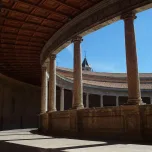
Palace of Charles V — Alhambra
Symbolic end of the route. The palace did not exist in 1526, but stems from the imperial stay and Pedro Machuca’s commission. According to the Board, the Palace of Charles V and Alhambra Museum have free access (unlike the Nasrid Palaces, which require a timed ticket). From October 2026 it hosts the main quincentenary exhibition.
Local tips
Exterior vs half day
Outside only, allow about 3 h 30. With Royal Chapel, Cathedral, San Jerónimo and Palace of Charles V inside, allow a half day and buy tickets in advance.
Climb to the Alhambra
The route is moderate because of the Puerta de las Granadas–Palace of Charles V stretch. In summer do it in the morning or use the line bus from Plaza Nueva.
Geographic order, not chronological
This sequence optimises walking. It does not replicate the 1526 ceremonial order, which started at Elvira and went straight to the Alhambra.
Read the history before or after
For context on 1526, Isabella of Portugal and the 2026 quincentenary, open the linked guide at the end of the walk.
Route information
Starting point
Plaza del Arco de Elvira, by Puerta de Elvira. Reach it by bus to Gran Vía or walk from the centre (10–15 min from Plaza Nueva).
Ending point
Palace of Charles V, within the Alhambra complex. Return on foot downhill, C30/C32 bus or taxi from the access area.
How to get there
The whole route is walkable except the optional bus for the final climb. Avoid driving in the centre; for the Alhambra use public transport or edge parking. See <a href="/en/guides/aparcar-granada-zbe/">where to park in Granada</a> if arriving by car.
Estimated budget
Free as an exterior walk. With entries (Royal Chapel, Cathedral, San Jerónimo, palace exhibition): allow €25–40 depending on combination.
Who is it for
Travellers with historical interest, art history students and anyone visiting Granada during the 2026 quincentenary who wants a physical plan, not just reading.
Accessibility
Not fully wheelchair-accessible: cobbles, gradient and Alhambra climb. The centre stretch (Chancillería to Cathedral) is flatter; you can shorten the route before Hospital Real.
Best time to visit
Weekday morning. In October–November 2026, combine with the quincentenary exhibition at the Palace of Charles V and Hospital Real.
WHAT TO BRING
- Comfortable shoes with grip for the Alhambra climb
- Water, especially May to September
- Sun protection on the Cuesta de Gomérez stretch
- Budget for tickets if visiting monuments inside