
- Culture
- 11 min read
- 17 Aug 2026
In 1526 Granada hosted an imperial court for months. Charles V and Isabella of Portugal did not simply “pass through” the city: they made it a temporary seat of empire, took decisions still readable in the Alhambra, the Hospital Real and the Renaissance centre, and left a legacy the 2026 quincentenary puts back on the map. This guide explains what happened, what remains today and how to walk it.
Quick answer: the imperial couple made their solemn entry on 4 June 1526 through the Puerta de Elvira, resided at the Alhambra until 10 December and left a legacy visible in the Palace of Charles V (a later project), Hospital Real, university and Renaissance centre. To walk it: Charles V route in Granada.
Last updated: 17 August 2026
| Solemn entry | 4 June 1526 · Puerta de Elvira |
|---|---|
| Stay | 4 June – 10 December 1526 (about six months) |
| Key figures | Charles V and Isabella of Portugal |
| Urban legacy | Alhambra · Hospital Real · Estudios Generales (UGR) · Renaissance centre |
| 2026 quincentenary | Exhibition 8 Oct 2026 – 11 Jan 2027 · UGR congress 18–20 Nov 2026 |
1. Why 1526 matters
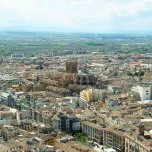
1526 is not a decorative date. It marks the moment Granada moves from being “the city of the Catholic Monarchs” to also being an imperial capital with court, ambassadors, artists and administration. For several months it ceased to be a peripheral destination in the conquered Nasrid kingdom and became a de facto seat of an empire spanning Europe, the Mediterranean and the Americas.
Decisions taken here — from the charter of the Estudios Generales to the Renaissance palace within the Alhambra — explain the Renaissance Granada you still visit. Five centuries later, that stay is still visible in the Charles V Palace project, the Hospital Real as UGR rectorate, the Cathedral and Royal Chapel, San Jerónimo and the urban layout you can still walk. 2026 adds exhibitions, congresses and heritage activities; the history of 1526 endures.
2. Charles V and Isabella of Portugal arrive in Granada
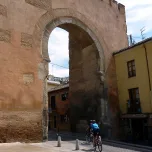
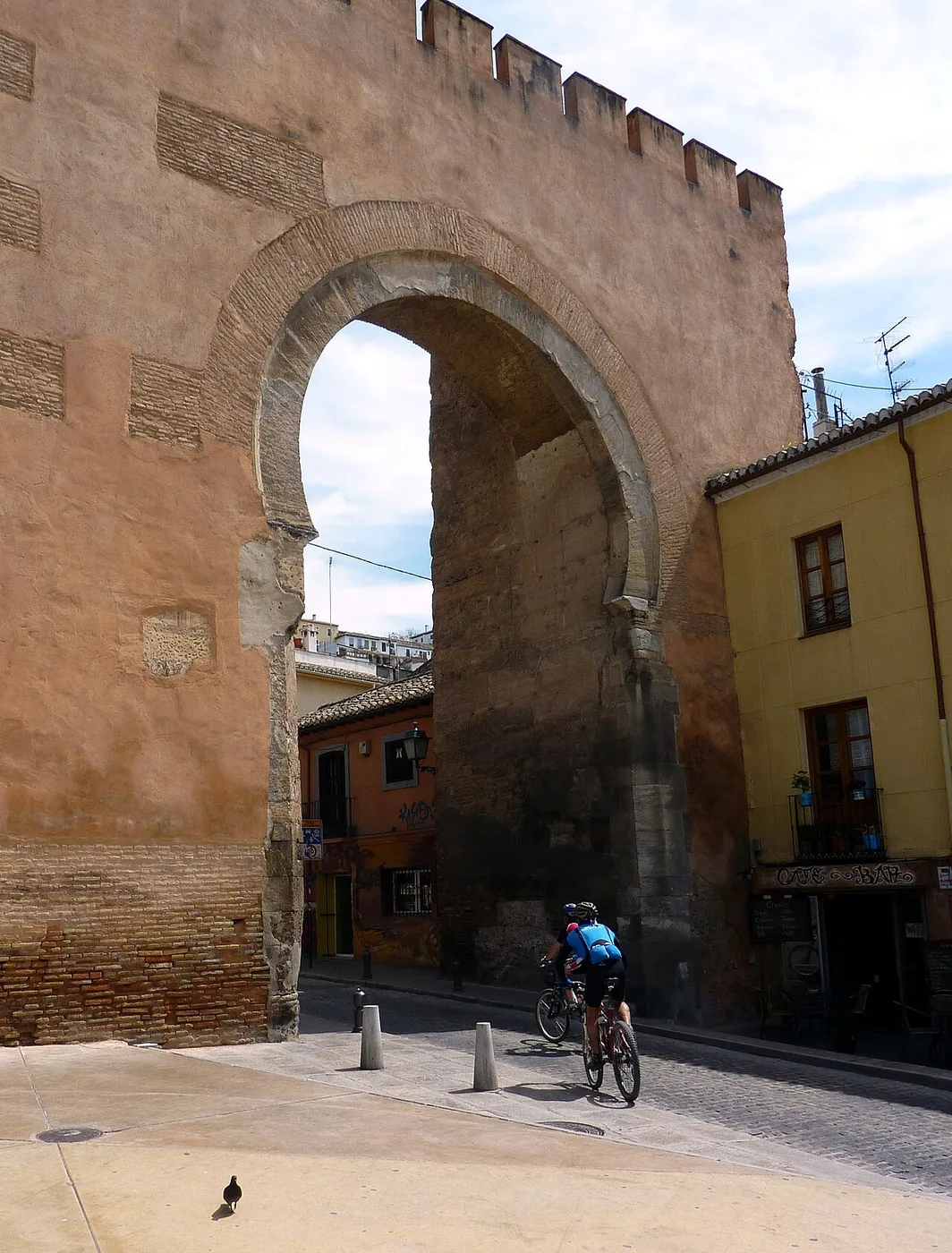
After their marriage in Seville on 10 March 1526, the couple travelled through Andalusia before entering Granada. Granada sources and studies on the imperial visit place the solemn entry on 4 June 1526, coming from Santa Fe. The procession was received at the Puerta de Elvira, decorated with a triumphal arch and an altar where Charles V swore to uphold the city’s privileges.
From there they advanced along Calle de Elvira towards the centre. At Santa María de la O church — then the cathedral seat, on the site of the former main mosque — the chapter celebrated a solemn Te Deum; by night they reached the Alhambra, with the city lit. This was not a flying visit: urban preparations (street widening, repairs to Puerta de Elvira, Alhambra refurbishment) point to a prolonged stay.
3. Granada as imperial court
For months Granada was not a private retreat. It functioned as a seat of government: ambassadors arrived, imperial business was handled, artists, clergy and intellectuals circulated, and imperial administration operated from the city. In the European context of 1526 — tensions with France, the Mediterranean, American territories — Granada gained unusual political weight for an Andalusian city.
4. The Alhambra of Charles V
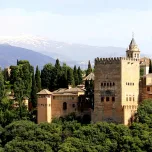
The monarchs settled in the Nasrid fortress, in rooms prepared by the Catholic Monarchs and refurbished for the visit. Charles V used the area around the Court of the Lions; Isabella of Portugal, the Mexuar zone linked to rooms Queen Isabella had used.
The imperial stay did not leave the Palace of Charles V built: that building is a later project, commissioned after experiencing the Alhambra and designed by Pedro Machuca (construction began after 1526). The 1526 visit did mark the decision to raise a Renaissance palace within the complex, in dialogue — and tension — with Nasrid architecture. For tickets, times and options without the Nasrid Palaces, see our Alhambra tickets guide.
5. The Palace of Charles V
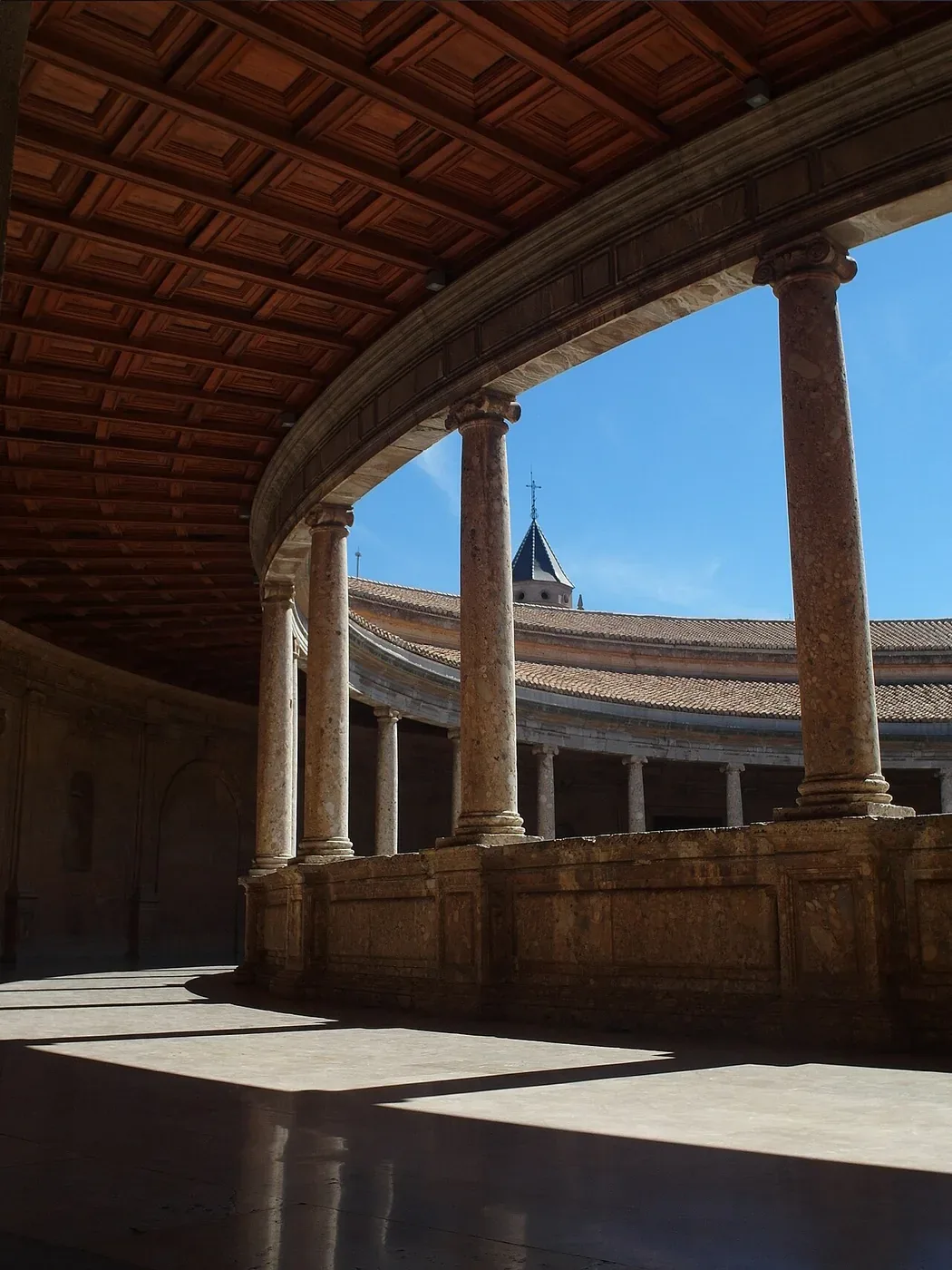
A Renaissance building with a square plan and circular courtyard, unique in its type, at the heart of the Alhambra complex. It represents the imperial will to overlay a European language on Nasrid space without abandoning it. Today it houses the Alhambra Museum and the Granada Museum of Fine Arts.
According to the Alhambra Board, access to the Palace of Charles V and the Alhambra Museum is free of charge, under different rules from the Nasrid Palaces (which require a timed ticket). The circular courtyard and museum rooms can be visited without a Nasrid ticket; always check hours and special events (such as the quincentenary exhibition) on the official site.
6. Isabella of Portugal in Granada
The empress is not an appendix to Charles V’s story. She had a real presence during the stay: she took part in court life, shared residence in the Alhambra and, according to chroniclers and studies on the visit — including Juan Antonio Vilar — moved to the Monastery of San Jerónimo after the summer earthquakes of 1526, remaining there even after the emperor left in December.
The Queen’s Dressing Room (Peinador de la Reina) in the Alhambra is linked to her stay and royal reuse of space. In the quincentenary programme, Isabella appears in the title of the main institutional exhibition alongside Charles: the imperial couple is the narrative axis.
7. The birth of a university
Do not simply say “Charles V founded the University of Granada in 1526”. The institutional chronology is more precise:
- 7 December 1526: Charles V issues the royal charter creating the Estudios Generales, institutional origin of the university.
- 14 July 1531: Pope Clement VII signs the bull formally constituting the university.
UGR marks 2026 as the quincentenary of the 1526 royal initiative and prepares 2031 for the papal bull. For broader institutional context — Granada, university and cultural candidacy — the Granada 2031 hub offers current background without replacing this historical reading.
8. Hospital Real
One of the most emblematic Renaissance buildings linked to the Carolingian period. Charles V supported its completion; during the imperial stay it served functions suited to a court in the city. Today it houses the University of Granada rectorate and is a listed heritage asset (BIC). In 2026 it hosts part of the quincentenary exhibition in its crossing, while conservation work continues on historic structures.
9. Cathedral and imperial project
The Renaissance Granada you see in the centre revolves around the Cathedral, which Diego de Siloé transformed from 1528. The 1526 stay coincided with preparations and reforms around the cathedral area; Francisco Bermúdez de Pedraza’s chronicle records the tradition of adapting the Royal Chapel retablo to suit the imperial presence, though the specific detail should be read as chronicle tradition, not archaeological certainty. Cathedral, Sagrario and Royal Chapel are related but distinct buildings.
10. Royal Chapel
Mausoleum of the Catholic Monarchs and a key piece of Granada’s dynastic programme. For Charles V, the Royal Chapel connected his lineage to Ferdinand and Isabella and reinforced Granada’s role in the Hispanic monarchy.
11. San Jerónimo
Distinguish two layers: the imperial link — Isabella of Portugal’s stay after the 1526 earthquakes — and the tomb of the Great Captain, funded by María de Manrique and Diego de Siloé’s masterpiece. Related Renaissance stories, but not identical.
12. Puerta de Elvira
Ceremonial entrance for kings and, in 1526, the stage for the imperial oath to Granada. Today visible from Plaza del Arco de Elvira, at the start of Calle de Elvira. Symbolic starting point of the Charles V route in Granada. In the quincentenary framework, UGR plans to restore and install the sculpture Horse of Emperor Charles (Grupo RO-TO) in the square, on the same spot where the monarchs entered.
13. Imperial Granada you can still see
| Place | What happened in 1526 | What remains today |
|---|---|---|
| Alhambra and Palace of Charles V | Imperial residence; decision to build the Renaissance palace | Visit complex; palace museums with free access |
| Hospital Real | Carolingian support for completion; court functions | UGR rectorate; partial 2026 exhibition venue |
| Cathedral, Royal Chapel and Sagrario | Sixteenth-century urban and dynastic programme | Visit monuments in the centre |
| San Jerónimo | Isabella’s stay after the earthquakes | Renaissance church and Great Captain’s tomb |
| Puerta de Elvira | Solemn entry on 4 June | Arch and square; start of the GRN route |
| Real Chancillería and La Madraza | Judicial and intellectual power of imperial Granada | Buildings in the historic centre |
14. 2026 quincentenary agenda
This section is time-bound. After 2026 it can be read as “what was celebrated during the 2026 quincentenary”. Last editorial check: 17 August 2026.
Upcoming (as of August 2026)
- 8 October 2026 – 11 January 2027: exhibition 1526. Isabella of Portugal and Charles of Habsburg in Granada (see detailed block).
- 18–20 November 2026: congress Granada, desde 1526 construyendo el futuro (see detailed block).
- Restoration and installation of Horse of Emperor Charles in Plaza del Arco de Elvira.
Already held or underway
- UGR presentation of the quincentenary heritage programme (July 2026).
- Alhambra Board programming during summer 2026 (theatre, concerts, guided visits).
- Exhibition Moorish zambras for Emperor Charles V (1526) at Corral del Carbón (until September 2026, per Music and Dance Festival schedule).
Heritage and cultural selection
- Board programme linked to the Carolingian year: concerts, classical theatre, guided visits. Calendar at alhambra-patronato.es.
- Cycle “The journey of Charles of Habsburg and Isabella of Portugal to Granada” in Santa Fe, Pinos Puente, Albolote and Alcalá la Real (September–November 2026, UGR).
15. Exhibition «1526. Isabella of Portugal and Charles of Habsburg in Granada»
Central exhibition of the quincentenary, organised by UGR and the Alhambra Board. More than 120 works across two complementary venues:
- Palace of Charles V: display The royal palaces of the Alhambra — the Alhambra as imperial court residence.
- Hospital Real crossing: Granada: imperial capital — imperial stay and political, cultural and urban change.
Confirmed dates: 8 October 2026 – 11 January 2027. Times and tickets depend on the Board and UGR — confirm on official sites as October approaches.
16. Congress «Granada, desde 1526 construyendo el futuro»
From 18 to 20 November 2026, the University of Granada organises this international scientific meeting on the legacy of 1526. Planned venues include the Palace of Charles V, Archbishop’s Curia and university spaces.
Detailed programme and registration at congresovcentenario.com. As of August 2026, paper and non-paper registration deadlines were published; check for updates.
17. What to see in Granada to understand 1526
- Puerta de Elvira and Calle de Elvira
- Royal Chapel and Cathedral
- Hospital Real
- Monastery of San Jerónimo
- Palace of Charles V (Alhambra)
- Real Chancillería and La Madraza
- Queen’s Dressing Room (with Alhambra ticket)
For a general first visit, keep using What to see in Granada. To walk the itinerary with ordered stops:
Walk Granada in 1526 — Charles V route
18. Timeline
| Date | Milestone |
|---|---|
| 10 Mar 1526 | Marriage of Charles V and Isabella of Portugal in Seville |
| 4 Jun 1526 | Solemn entry through Puerta de Elvira |
| Summer 1526 | Imperial court at the Alhambra; earthquakes; Isabella moves to San Jerónimo |
| 1526 | Institutional decisions; Renaissance palace commission (later construction) |
| 7 Dec 1526 | Royal charter of the Estudios Generales |
| 10 Dec 1526 | Imperial couple leaves Granada |
| 14 Jul 1531 | Papal bull of the University of Granada |
| 2026 | Quincentenary of the imperial stay and 1526 university initiative |
| 2031 | Quincentenary of the 1531 bull (UGR milestones) |
19. What people often get wrong about Charles V in Granada
- The Palace of Charles V was not built during the 1526 stay. The visit launched the project; construction began later, with Pedro Machuca.
- The university was not fully constituted on 7 December 1526. That day launched the Estudios Generales; the bull came in 1531.
- Isabella of Portugal is not a secondary figure. She had her own stay, linked spaces and presence in today’s commemoration.
- Imperial Granada did not erase the Nasrid legacy. It overlaid it: the tension between both worlds remains visible in the Alhambra.
20. Frequently asked questions
When did Charles V arrive in Granada?
The solemn entry took place on 4 June 1526, according to documentation cited by studies on the imperial visit and institutional quincentenary sources.
How long did Charles V stay in Granada?
From 4 June to 10 December 1526 — about six months. Isabella of Portugal remained at San Jerónimo even after the emperor left, according to chroniclers.
Why was the Palace of Charles V built?
After experiencing the Alhambra during the stay, Charles promoted a Renaissance palace within the complex as an imperial symbol and residence suited to his rank, in dialogue with existing Nasrid architecture.
Did Charles V live in the Alhambra?
Yes, during the 1526 stay he resided in Alhambra rooms around the Court of the Lions.
What is Charles V’s link to the University of Granada?
He promoted the 7 December 1526 charter creating the Estudios Generales, institutional origin of UGR. Pontifical constitution was completed in 1531.
Where did Isabella of Portugal stay in Granada?
In the Alhambra (Mexuar) and, after the summer earthquakes, at the Monastery of San Jerónimo, according to chroniclers and specialised studies.
What is being celebrated in Granada in 2026?
The quincentenary of the 1526 imperial stay and Carolingian university initiative, with exhibitions, congresses, restorations and Alhambra Board programming. See the quincentenary agenda.
Is there a Charles V route in Granada?
Yes. GRN URBAN publishes the Charles V route in Granada, designed to walk the 1526 legacy with geographically ordered stops.
Walk Granada in 1526: Charles V route in Granada · Granada Card · Alhambra tickets · Granada 2031
Sources
- Fifth Centenary Congress — official programme · Congreso V Centenario Commemorative programme
Information checked on 17 August 2026. The latest official information prevails.
Add GRN URBAN as a preferred source
When you do, our latest guides and agenda updates appear more often in Top Stories and for you on Google.
Official Google setting · one tap · reversible